
Today’s choice
Previous poems
Kathy Pimlott
Going down to do lights and curtains to fool any burglars
Twilight: one after another security lights click on
illuminating pathways, steps, empty front lawns,
triggered by my benign progress, then, disappointed,
click off. The sky is a layer cake of contrails, pink
shepherds’ delight and darkness holding a waxing moon
two days short of being Wolf.
All done, street lamps
cast my long shadow so it circles me as 1 walk back.
It grows and shrinks, scales walls. Sensing something
behind me, I stop, turn. There she stands, fox-smart
from nose tip to tail. I wait. She does too. I don’t run.
I say, ‘Off you go. This is my life not a Lawrence novella’.
Frost sets the road crackling as robins shout the night in.
Kathy Pimlott has a collection, the small manoeuvres, with Verve Poetry Press (2022) and three pamphlets with The Emma Press –Elastic Glue and Goose Fair Night and most recently After the Rites and Sandwiches (2024). www.kathypimlott.co.uk
Leigh-Anne Hallowby
When we first came here two seasons ago
You were barely as high as my hip
Now you can look me right in the eye
It’s almost impossible to believe
Tadhg Carey
When our plaything ricochets
falling
who knows where
everything hinging
on the line
Luis Cuauhtemoc Berriozabal
I hear the roar of
the ocean. I hear
a series of shrieks
and long screams.
Natasha Gauthier
Nobody knows what Cicero’s gardener whistled
to his figs and olives, what the consul’s young wife
hummed to herself while slaves combed beeswax
and perfumed oils from Carthage into her hair.
Jean Atkin
She creeps under the opening, then stands.
Her guide passes her the stub of a candle,
holds up his own to show the ceiling rock.
Iris Anne Lewis
The track leads through thickets, threaded with eyes.
Elusive scraps of dreams, they gleam, flicker out.
Antonia Kearton
On my son’s desk lies
the periodic table of the elements.
I look. Amongst the arcane names
I recognise, easy as breathing,
carbon, oxygen, gold, beloved of kings.
Elizabeth Loudon
The first three days of war
have a surprising holiday feel.
No deadlines, just the giddy gasp of shock.
Ordinary life continues.
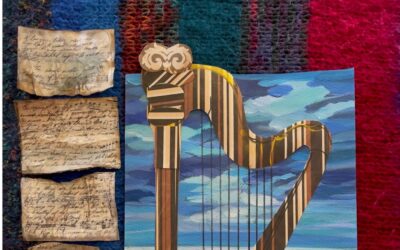
Oormila Vijayakrishnan Prahlad
A lacquer table, gloss under fingertips. A raised stage with dark linen. A young woman smiles with her hand-held harp, its nine strings glistening. The room swells with the cadence of her pearly notes. Beneath the pendant lights—a vision of serenity.